Misty McMichael: ALS Caregiver Stress & Support | Part 3


Misty McMichael – Heart of Gold: The Caregiver Who Never Goes Off Duty
Part 3 of 4
Every time I did Misty McMichael’s hair, it was on one of her rare “free days.”
And when I say rare, I mean rare.
Misty—wife and caregiver of Chicago Bears legend and professional wrestler Steve “Mongo” McMichael—allowed herself about one free day a month.
One.
She might get her nails done.
Get her hair done.
Maybe give herself the gift of going to a show or concert.
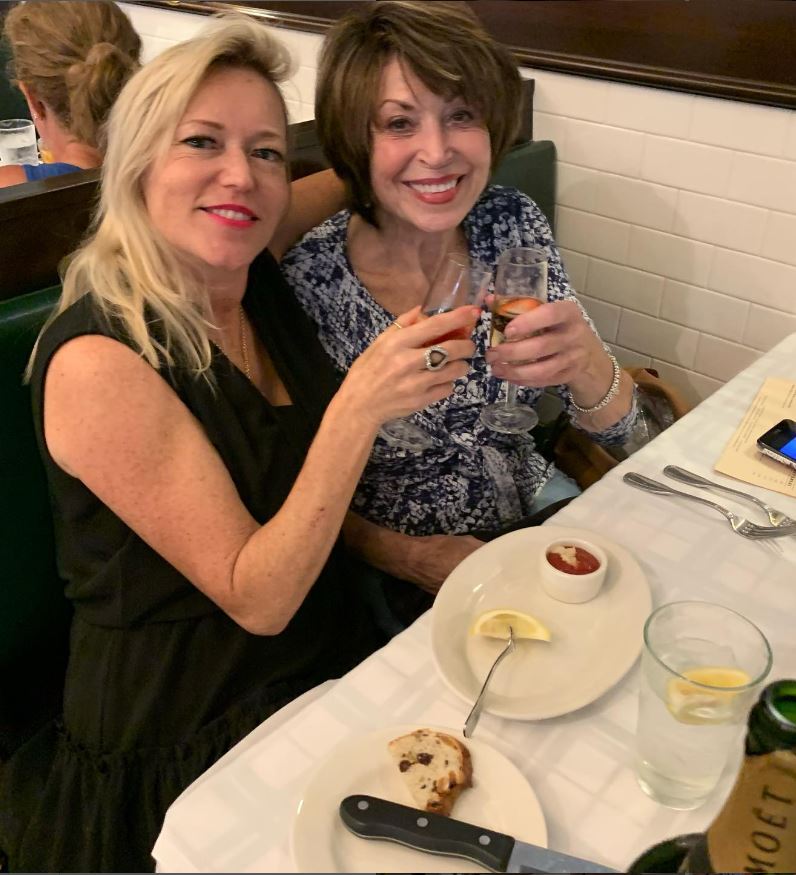
Or meet one or two girlfriends for lunch, dinner and drinks. Gibson’s in Chicago’s Gold Coast, near my salon, was a favorite.
But that was it.
One day.
Then she went back to taking care of Steve.

Steve “Mongo” McMichael & Misty McMichael via Misty’s Instagram McMichael.Misty FOLLOW

Misty McMichael’s “Crying Room”
It wasn’t actually a special room.
It was the laundry room at the far end of the house, away from Steve’s bedroom.
There was a little chair in there.
Misty would sneak into the laundry room, sit in that chair and cry.
But she’d usually wait until the washer or dryer was running.
That way Steve and his nurses couldn’t hear her.
Think about that.
She even protected Steve from the sound of her grief.
Sometimes she cried while walking Blue, their beloved Chihuahua.
Misty also wanted me to thank her sweet neighbors.
They knew the McMichaels.
They knew the situation.
And when they’d see Misty walking Blue with tears streaming down her face and her fake eyelashes beginning to slide down her cheeks, they’d wave.
Or nod.
And then politely look away.
Sometimes love means helping.
Sometimes love means asking questions.
And sometimes love means seeing somebody crying on the sidewalk and having the grace to pretend you didn’t.
When Home Care Becomes a Full-Time Medical Operation
As Steve’s ALS progressed, his care became increasingly complex.
Eventually, he required a tracheostomy and ventilator and needed someone available around the clock.
That meant Misty wasn’t simply a wife helping her sick husband anymore.
Their home had effectively become a place of medical care.
Nurses.
Equipment.
Supplies.
Medications.
Feeding.
Breathing.
Appointments.
Bills.
And constant vigilance.
Professional nursing care was extraordinarily expensive, Misty told me.
And when Steve first reached the point where they desperately needed more help at home, she and Steve were already financially devastated.
Their savings had been eaten away by expenses associated with his illness.
They were struggling with their mortgage.
Misty worried about putting food on the table.
And somehow she still had to figure out how to get Steve to his medical appointments and find the care he needed.
This wasn’t the celebrity life she’d married into.
This was survival.
When Caregiver Stress Attacks the Caregiver
As Misty tried to arrange Steve’s increasingly complicated care while struggling to pay their bills, she began breaking down.
Emotionally.
And physically.
She developed severe vertigo during this intensely stressful period.
The room would spin.
She’d vomit until there was practically nothing left.
Then, when she was finally strong enough to get out of bed…
She still had a husband and daughter who needed her.
Misty remembers doctors essentially telling her that she needed to reduce her stress.
“Just don’t stress.”
Right.
Excellent idea.
Misty had never exactly been what you’d call a “zenned-out” girl.
She didn’t meditate.
And even if she had—
How exactly do you not stress when your husband is losing the ability to move, you’re running out of money, your home doesn’t accommodate his wheelchair, and you don’t know how you’re going to keep a roof over your family’s heads?
“Just don’t stress?!”
That wasn’t going to cut it.
More From Jon-David: How I Killed My Mother
“How I Killed My Mother is my memoir podcast about family, forgiveness, identity, humor, grief, caregiving, spirituality and the uncomfortable discovery that our parents sometimes make more sense after we begin repeating their mistakes.”
And ask yourself:
What did you once hate about your parents—only to hear yourself saying or doing the exact same thing years later?
Trailer
Listen to the podcast and join my mailing list at HowIKilledMyMother.com for new stories, bonus material and updates about the upcoming memoir.
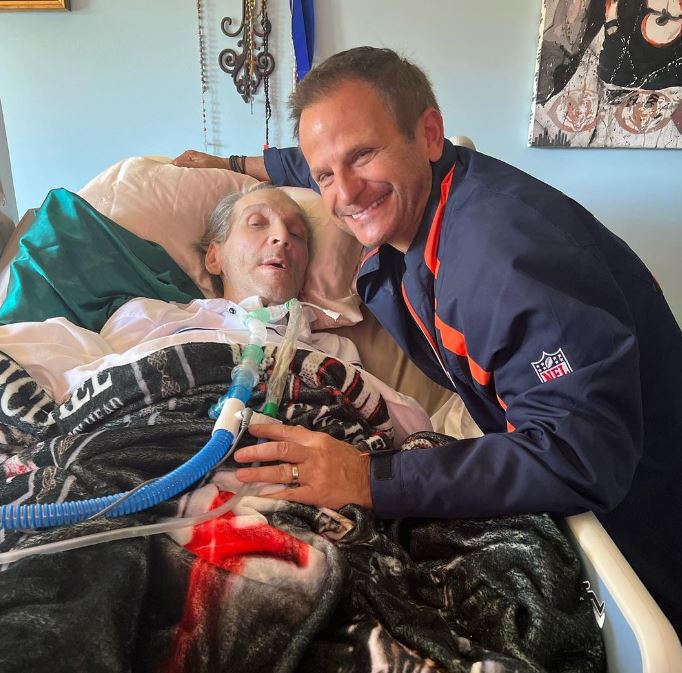
“Our Sweet friend Lou came to visit today.”
When Misty Thought She Was Going to Lose Everything
When Steve completely lost the use of his legs—but could still breathe on his own—Misty was still dealing with vertigo.
And she was still the person helping move him from the bed into his wheelchair.
It quickly became obvious that their home wasn’t going to work anymore.
They needed ramps.
They needed accessibility.
They needed money.
And Misty believed they were about to lose the house anyway.
She told me this was the scariest time of her life.
In her mind, she was “just a wife.”
She didn’t think she had the skills necessary to navigate what was happening.
She didn’t know whom to call.
She didn’t know anyone who’d been through anything like it.
But she had a daughter.
A husband.
A dog.
And they deserved the basics.
A roof.
Food.
Safety.
It felt as though everything was on Misty.
And then help came.

The Three Women Misty Says Saved Her Life
Help arrived in the form of three angels.
Laurie Demakos.
Betsy Shepard.
And through them, Misty met Lizzy Nicholson, whose husband, Tom Sullivan, was living with dementia.
These women helped Misty.
They educated her.
They fed Misty and her family when the family was financially devastated.
But maybe most importantly:
They held her together.
Laurie, Betsy and Lizzy worked on Misty.
And they worked with Misty.
At a time when Misty believed she was losing her home and possibly her mind, these three women kept telling her:
Things are going to be alright.
Eventually, Misty started taking the free days her friends prescribed.
She learned how to begin stopping the financial bleeding.
And more importantly, she slowly began believing them.
Maybe things really were going to be alright.

A Hollywood hairdresser moonlights for a cocaine trafficking couple in this 80’s campy semi-true tale. Book One in The Mafia Hairdresser Chronicles series & based on the author’s own fabulously dangerous campy criminal lifestyle.

Best Indie Books of 2012 SEMIFINALIST: The Mafia Hairdresser, reinvents himself as an A-List Chicago party boy and befriends celebrity book-agent, Tarin, who encourages him to party-on and write about the nightlife as only he can.
Sometimes You Have to Be Helped Before You Can Help Someone Else
Misty told me she doesn’t believe she could have managed the later outpouring of love, gifts and financial support for Steve if those three women hadn’t first picked her up.
She couldn’t have found her inner strength if Laurie, Betsy and Lizzy hadn’t helped her discover it.
Misty says they saved her life.
They changed her.
For the better.
And when Misty goes into her crying room, she still thinks about those women.
“After I let go of my tears,” she told me, “I thank the universe for friends like them and I hope that I can be for Steve like Lizzy was for her husband.”
I love that.
Because that’s caregiving too.
We talk so much about caregivers giving.
Giving time.
Giving sleep.
Giving money.
Giving up careers.
Giving up freedom.
Giving and giving and giving.
But sometimes a caregiver has to receive before she has anything left to give.

The Things Nobody Tells You to Budget For
Misty started rattling off examples.
Wipes.
Ventilator supplies.
Gauze.
Feeding supplies.
Medical equipment.
Prescription medications.
Some things were covered.
Some weren’t.
Some supplies were surprisingly expensive through one source and less expensive somewhere else.
Others had to come from specialized medical suppliers.
Some suppliers didn’t accept their insurance.
And a seemingly tiny disposable piece of equipment could become a substantial expense when you needed it every single day—or several times a day.
Misty learned to question everything.
Does Steve really need this version?
Is there another option?
Does insurance cover it?
Can this be safely reused?
Where can I buy it?
Who do I call?
What happens when the manufacturer stops making something that worked perfectly well?
Those don’t sound like profound questions.
Until you’re exhausted, frightened, financially stretched, and someone’s life depends upon your getting the answers right.
When a Wife Becomes Part of the Medical Team
Steve’s care eventually involved a tracheostomy, feeding tube and other medical devices that required regular professional attention and careful management.
His medication regimen also became complicated.
Misty learned quickly that different doctors might be treating different problems.
That meant somebody needed to maintain the whole picture.
Misty became that somebody.
She kept track of what Steve was taking.
She asked questions.
She double-checked.
She communicated with doctors and nurses.
And when something didn’t seem right, she spoke up.
Sometimes calmly.
Sometimes…
Well.
Misty-style.
“There are a lot of great doctors,” Misty told me.
And she believed most of Steve’s doctors were great.
But she also understood that doctors can be overworked.
Communication isn’t always perfect.
And when you are the person living beside the patient every single day, you sometimes have information that one individual specialist doesn’t.
So Misty learned to advocate.
Fiercely.

Ric Flair, Steve, Mike Ditka

Sometimes You Have to “Pull a Misty”
Misty told me there were times she believed Steve needed more help with pain or anxiety and she felt she wasn’t being heard.
That’s when she’d “pull a Misty.”
Which could involve screaming.
“He’s dying, dckhead! He should get whatever the fck he wants!”
That’s Misty.
She also told me:
“I have found that the doctors who are calm and return phone calls in a timely fashion and flow with the needs of their patients, when the patient needs them, seem to be the best and knowledgeable doctors.”
Then came my favorite part:
“I love a calm doctor. Especially when I’m not.”
Misty had learned to force herself to be fierce.
To focus.
And to follow through.
But she also learned that the best medical relationships didn’t have to be battles.
They could be partnerships.
The Doctor Who Made House Calls
One of Misty’s favorite doctors was Steve’s neurologist, Dr. Jeffrey Curtin, DO.
Misty told me that Dr. Curtin made house calls when getting Steve to a hospital or office became too difficult.
He even attended one of Steve’s fundraising events.
More importantly, Misty said he helped teach her to be calmer and to think of Steve’s doctors as partners.
Misty credited those house calls with helping Steve remain at home rather than repeatedly going into the hospital.
For a family living with advanced ALS, that mattered enormously.

“You Could Be a Nurse”
Over the year that I did Misty’s hair—and made her blonder and blonder—I often listened as she took calls from Steve’s doctors and nurses.
Remember:
These were supposedly her “free days.”
And yet there she sat in my chair, still fielding medical calls.
I was amazed by how much she knew.
Medications.
Procedures.
Equipment.
Schedules.
Symptoms.
She exchanged clear, precise information with medical professionals so everybody involved could properly care for Steve.
One day I joked that she practically could have become a doctor or nurse herself.
Misty responded:
“I could have been a nurse. I went to college, and I was pre-med, but I thought it was boring.”
Of course she did.
And when she said that, something clicked for me.
Misty Had Become an Angel, Too
That’s when I knew I wanted to write about her.
Laurie, Betsy and Lizzy had been angels for Misty.
Now Misty had become one herself.
For Steve.
And increasingly, for other families affected by ALS.
So over many hair appointments, I began interviewing her.
I listened to the practical things she’d learned.
The mistakes.
The frightening moments.
The absurdities.
The things she wished someone had told her earlier.
And underneath almost every lesson was the same message:
Pay attention. Ask questions. Find good professionals. Learn what you can. And don’t try to do this alone.


What Misty Wanted Other Caregivers to Know
Don’t wait until you desperately need wheelchair access to start thinking about ramps and accessibility.
Think ahead about whether the home you’re living in can continue working as mobility changes.
Ask questions about medical bills and payment arrangements before allowing healthcare expenses to jeopardize the roof over your head.
Learn who your doctors are.
Know whom to call.
Keep your medication information organized and review changes with qualified medical professionals.
Find people who understand the disease.
And above everything else:
Ask for help. Often.
Because if you’re caring for someone with ALS—or another devastating progressive disease—you’re going to be stretched in a thousand different directions.
Your friends may have something you need.
Your coworkers may know somebody.
Your family may be able to give you an afternoon.
A neighbor might bring dinner.
A stranger might know how to solve the problem you’ve been staring at for three days.
And sometimes the thing somebody gives you isn’t money.
Or medical expertise.
Or equipment.
Sometimes they simply give you permission to go into the laundry room…
Turn on the washing machine…
Sit in your little chair…
And cry.
Then you wipe your face.
Fix your eyelashes.
And go back to the person you love.
I understand that image differently now than I did when Misty first told me about her crying room.
Because later, when I became my father’s caregiver, I learned something Misty already knew:
Taking care of someone you love can be one of the greatest expressions of love in your life.
It can also bring you to your knees.
Both things can be true.
And that truth is at the heart of the story I’ll tell in Saving the Father.
End of Part 3 of 4.
Continue to Part 4 →
In Part 4, Misty’s story continues with what ALS took from Steve, what caregiving demanded from Misty—and what love looked like when almost everything else had been stripped away.

ALS Information and Help
ALS Foundation: The largest, national non-profit organization dedicated to ALS by providing assistance for people with ALS through a nationwide network of chapters, coordinating multidisciplinary care through certified clinical care centers. CLICK
Les Turner ALS Foundation: Provides comprehensive ALS care and support services in the Chicagoland area and at Northwestern Medicine. Information & answers in advanced vital care, research, and life-enhancing treatments. CLICK

The Mafia Hairdresser Chronicles: A Fusion of Fiction and Humor in an Original Serial Podcast
Immerse yourself in “The Mafia Hairdresser Chronicles,” a captivating fiction podcast that combines humor, drama, and a touch of the underworld. This top fiction podcast brings together two enthralling series: “Mafia Hairdresser” and “The Glow Stick Gods,” offering a total of 41 original fiction podcast episodes, plus bonus content, for a binge-worthy experience.

Special True Crime Podcast Episodes
The newly renovated The Boca Raton resort, spa & salon was newly purchased and renovated by The Northview Hotel Group. The author narrator was thrilled to be hired and work there until he retired from the salon industry. But the company lied, committed fraud and fraud inducement to the author and all the staff.
SEASON 3
5 Shocking Non-Fiction Episodes

How I Killed My Mother
A podcast about guilt, caregiving, forgiveness…and discovering that sometimes surviving your family is the beginning of finding yourself.
“I didn’t kill my mother.
But for years…
I believed I had.” – Jon-David
This is the true story of what really happened.
Misty McMichael Heart of Gold – 4
As ALS took more from Steve “Mongo” McMichael, Misty protected his comfort, dignity and dreams. The final chapter of their extraordinary caregiving love story—and the legacy that remains.

Jon-David & Goliath: Deceit, Trust & The Boca Raton
What happens when a dream job at a legendary luxury resort becomes a financial nightmare? Jon-David tells the story behind Jon-David & Goliath—and why standing up to Goliath wasn’t exactly new territory for him.
How I Killed My Mother: A Queer Family Story of Love & Growth
How I Killed My Mother started as a collection of queer family stories. Then caregiving, grief and writing the book forced Jon-David to look again at his mother—and himself.
My Relationship With My Mother Got Better After She Died
I thought death ended my complicated relationship with my mother. Instead, old loves returned, prayers seemed to be answered, and I began seeing both Mom—and myself—very differently.