Misty McMichael Heart of Gold – 4

Misty McMichael: Steve McMichael, ALS & Caregiver Love | Part 4
Part 4 of 4
Caring for someone with ALS takes a lot.
Money.
People.
Services.
Doctors.
Nurses.
Medicine.
Equipment.
Time.
Patience.
And love.
Lots and lots of love.
Misty McMichael learned that some of the things she needed to care for her husband, Steve “Mongo” McMichael, weren’t even on her radar until suddenly she needed them.
That’s one of the lessons running through this entire story.
Caregiving has a way of teaching you things five minutes after you desperately needed to know them.

Steve “Mongo” McMichael & Misty McMichael via Misty’s Instagram McMichael.Misty FOLLOW

You need help.
The Things a Caregiver Doesn’t Know She’ll Need
Massage, for instance, became an important part of Steve’s care.
Misty arranged regular therapeutic massage at home for him to help with his comfort and increasingly immobile body.
Misty?
She rarely got a massage herself.
Her own back was “all jacked up,” as she put it, from leaning over Steve’s bed.
Doing “tube stuff.”
Communicating.
Cleaning.
Adjusting.
Caressing.
Taking care of him.
She’d get a massage occasionally when she could afford one and could find the time.
Steve came first.
Even the Bed Matters
Beds became another education.
An ALS patient with severely limited mobility has to be repositioned and cared for carefully, and the wrong setup can make life harder not only for the patient but for everyone caring for that person.
Somewhere along the way, Misty saw a specialized Linet bed.
She wanted one for Steve.
So she started calling.
The distributor.
The manufacturer.
Anyone who might help.
Initially, she was told the particular bed she wanted was intended for commercial healthcare settings rather than someone’s home.
Misty being Misty, that wasn’t necessarily going to be the end of the conversation.
Through the generosity and connections of people associated with the Chicago Bears and friends of Steve, a Linet bed was eventually obtained for him.
And Misty loved it.
She told me that when Steve no longer needed that bed, she intended to pass it on.
Because somebody else would.
That’s another thing she learned through ALS:
Sometimes the thing your family desperately needs already exists in somebody else’s house.
And someday, something in your house may save another family.
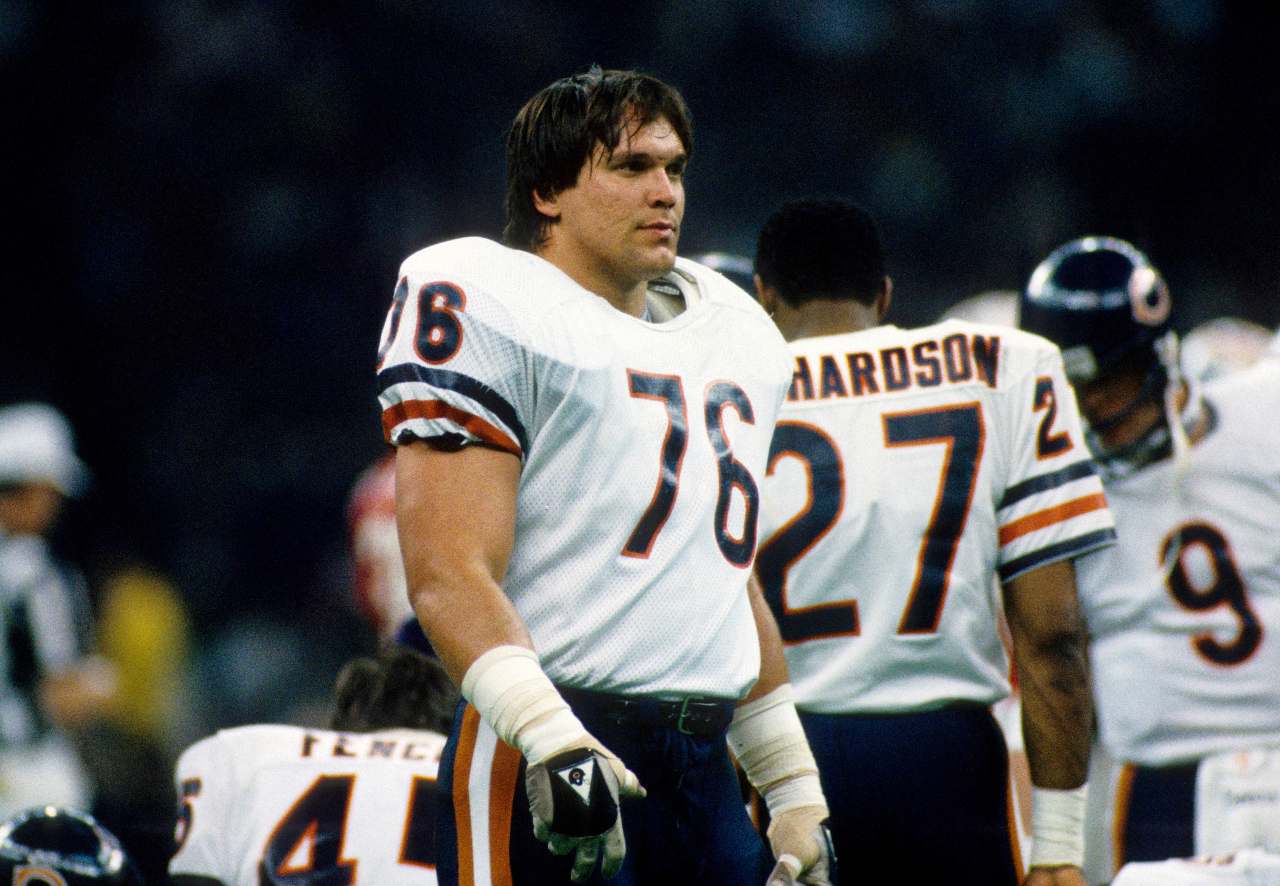
Steve Mongo McMichael Chicago Bears via Misty’s Instagram McMichael.Misty FOLLOW
Steve McMichael’s Friends Kept Showing Up
One of the last pieces of advice Misty wanted to give other families dealing with ALS involved visitors.
Privacy is important.
The wishes and comfort of the person who is sick are important.
But Misty also believed that, when appropriate, visits from the right people could mean a great deal.
And Steve had made a lot of friends.
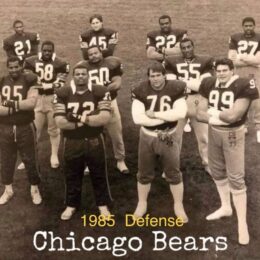
His teammates from the legendary 1985 Chicago Bears came to see him.
His wrestling friends came.
Old friends.
Newer players who’d been inspired by him.
People from different chapters of Steve’s extraordinary life continued showing up.
Olin Kreutz.
Brian Urlacher.
Casey Urlacher.
Charles “Peanut” Tillman.
Members of the McCaskey family.
Ric Flair—Steve’s longtime friend and wrestling colleague—was a regular.
Misty told me Ric was deeply affected by Steve’s condition.
Sometimes he’d leave bawling.
But never in front of Steve.
There was a rule in Misty’s house:
You could feel whatever you needed to feel.
Just don’t make Steve take care of you.
More From Jon-David: How I Killed My Mother
“How I Killed My Mother is my memoir podcast about family, forgiveness, identity, humor, grief, caregiving, spirituality and the uncomfortable discovery that our parents sometimes make more sense after we begin repeating their mistakes.”
And ask yourself:
What did you once hate about your parents—only to hear yourself saying or doing the exact same thing years later?
Trailer
Listen to the podcast and join my mailing list at HowIKilledMyMother.com for new stories, bonus material and updates about the upcoming memoir.
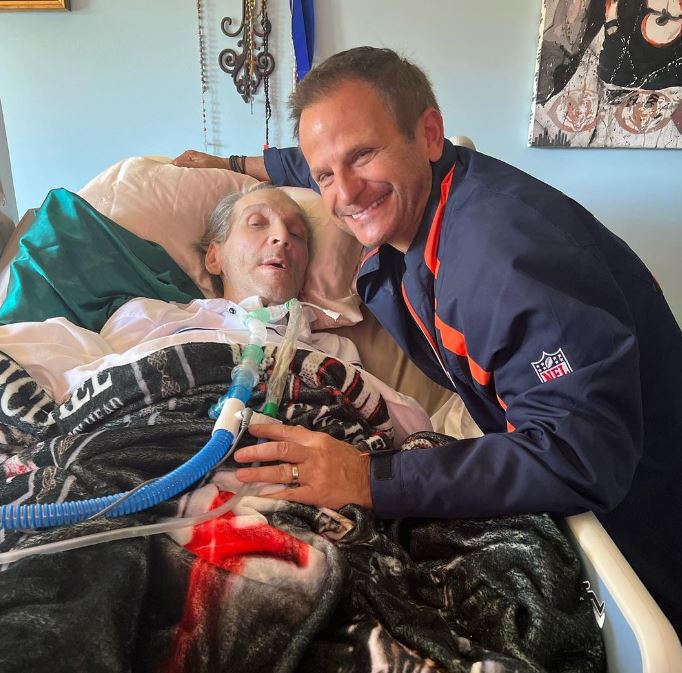
“No Crying Shit”
As Steve’s disease progressed, visits became more difficult.
When Steve had been healthier and better able to communicate, people came around more frequently.
Later, Misty had to limit the traffic.
It became too much for him.
And seeing Steve could be shocking for someone who remembered this enormous, powerful athlete—the man who had seemed practically indestructible.
Misty understood that.
But she wasn’t going to allow somebody else’s shock or grief to become Steve’s burden.
Two of Misty’s dancer girlfriends once came over to see him.
Before going into Steve’s room, they started reminiscing about the old days.
They remembered sitting around somebody’s house partying while Steve would put on a G-string and imitate one of their male-stripper friends’ dance moves.
Steve had always been incredibly comfortable in his body.
And funny.
That was part of his sexy.
Then the women started crying.
Misty would have none of that “crying shit.”
She thanked them for coming.
And sent them home.
They never got to see Steve.

You Had to Pass Misty’s Test
Eventually, Misty developed a system.
She had a monitor in the living room that allowed her to keep an eye on Steve while she cooked, cleaned or did whatever else needed doing.
If someone hadn’t seen Steve in a long time, Misty showed them the monitor first.
She wanted them prepared.
She did not want them walking into his room, seeing how ALS had changed him and breaking down in front of him.
“So I prepare them,” Misty told me.
“And if they pass the test, I say, ‘Okay! Let’s go in!’”
That was Misty.
Still protecting him.
Even from somebody else’s tears.

A Hollywood hairdresser moonlights for a cocaine trafficking couple in this 80’s campy semi-true tale. Book One in The Mafia Hairdresser Chronicles series & based on the author’s own fabulously dangerous campy criminal lifestyle.

Best Indie Books of 2012 SEMIFINALIST: The Mafia Hairdresser, reinvents himself as an A-List Chicago party boy and befriends celebrity book-agent, Tarin, who encourages him to party-on and write about the nightlife as only he can.
The Day I Went to Misty and Steve’s House
For my final formal interview for this story, I went to Misty’s home.
And I did her hair in the dining room.
Of course I did.
I wanted to understand her life from inside the house—not only from the stories she’d told me during her hair appointments and the rare free evenings when we’d meet as friends at Gibson’s or the bar at the Four Seasons Chicago.
And I knew Misty would talk more if I was doing her hair.
Most people do.
It’s one of the strange privileges of being a hairdresser.
People sit in your chair.
You touch their hair.
And eventually they tell you things.
My clients always knew that what they told their hair guy stayed private.
Misty and I had simply made a different agreement.
She wanted this story told.
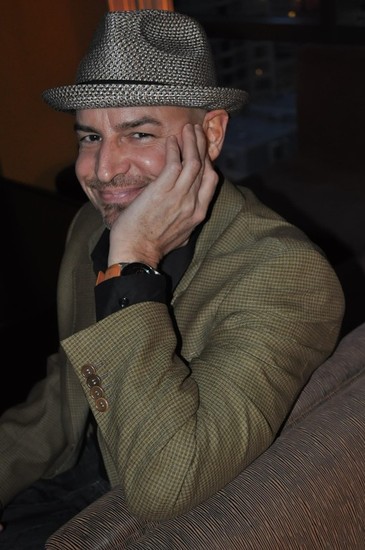

Misty, Betsy and Laurie
An Ordinary Afternoon in an Extraordinary House
While I did Misty’s hair, my two Chihuahuas, Finnegan and Valentina, played with Misty’s Chihuahua, Blue.
Every once in a while, Misty’s daughter, Macy, wandered into the kitchen for a snack or to ask her mother something.
The phone rang.
Of course.
If it was one of Steve’s medical professionals or friends calling for an update, Misty answered.
Nurses came in and out.
They talked about Steve.
And they talked about food.
Sausage and cabbage in the refrigerator.
Smothered ribs somebody was making.
Who was going to eat what.
Who was coming for the next shift.
Life.
That’s what struck me.
In a house organized around an incurable disease, people were still talking about leftovers.
Dogs were playing.
A daughter wanted a snack.
A hairdresser was putting foils into someone’s hair.
People laughed.
People ate.
Life hadn’t stopped.
It had just reorganized itself around ALS.
Seeing Mongo on the Monitor
Misty sat facing the living room while I stood behind her, strategically placing foils and color in her hair.
We both had a clear view of the monitor.
Steve was lying in his bed.
I couldn’t tell whether he was asleep or awake.
His eyes were partially closed.
His nurse moved around him periodically, checking his trach and doing whatever else needed to be done.
Misty never asked whether I wanted to meet Steve.
And I didn’t ask.
It would have been an honor.
I’m a Chicagoan.
I knew who Mongo McMichael was.
The legend.
I only wish I could have met him before ALS.
But I saw him on that monitor.
And Misty had been right about something.
When I left their home, I felt profoundly thankful.
Thankful that I could move my arms and legs.
Thankful that I could breathe.
Thankful that I could communicate.
And thankful that Steve had Misty.
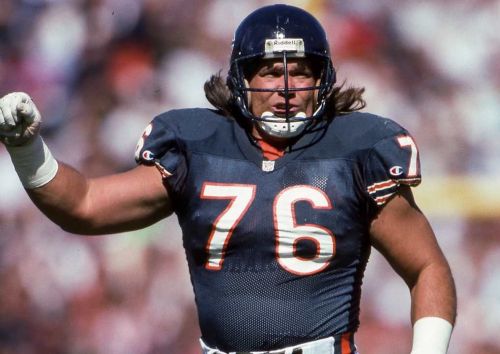

Steve’s Other Life—the One He Lived in His Dreams
Sleep became increasingly important to Steve.
It gave his body rest.
But something else happened when Steve slept.
He dreamed.
Misty told me that Steve had recently explained something to her:
His dream life had become better than his waking life.
Because in his dreams…
He was healthy.
He could return to the life he’d had before ALS.
The enormous body worked again.
He could move.
He could be Mongo.
Steve told Misty his dream life was totally “bitch’n.”
It had become one of the richest parts of living.
Misty reminded him how lucky he’d been to have the life he’d already lived.
It was as though he’d squeezed ten lives into one—and all before he was 65.
Steve agreed.
He was thankful.
But Misty heard something underneath the gratitude.
Weariness.
And it frightened her.
During that final interview, I noticed something had changed in Misty too.
When I’d first met her, she still talked as though she might somehow keep Steve going for another few years.
Now I don’t think she believed that anymore.
She knew the end was getting closer.
“You Can’t Dream When You’re Dead”
For more than two and a half years, Misty had awakened every day asking herself the same basic question:
How do I make Steve comfortable today?
She wanted him to feel her love.
Their daughter’s love.
His family’s love.
His friends’ love.
His fans’ love.
She educated herself medically.
She learned the equipment.
She learned how to talk with doctors.
She learned how to manage a house that had essentially become a place of around-the-clock medical care.
She learned how to advocate.
She learned how to ask for help.
And somewhere along the way, being Steve’s caregiver became part of who Misty was.
She told me she didn’t know what she’d do when he was gone.
Who would she be when she wasn’t taking care of him?
She still wanted him to stay.
For herself.
For their daughter.
And because she wanted him to have more dreams.
“You can’t dream when you’re dead,” Misty told me.
“So that’s something to live for, isn’t it?”


A Roof, Food—and One More Dream
After Misty’s three angels helped pick her up and put her back together, she told me she felt a hundred percent more financially secure.
She wasn’t.
The bills were still there.
Some might follow her for years.
But Misty’s definition of security had changed.
“I will have food on my table and a roof over our heads for every minute Steve breathes and sleeps and dreams,” she told me.
“We’ve always hung onto our dreams.”
That was enough.
When Help Comes In, Pass Some of It Along
Something else happened after people began helping the McMichaels.
Misty and Steve began helping other people.
Johnny and Michael Namoff helped produce the Mongo Mash Bash, a fundraiser supported by Steve’s fans and community.
When Misty reached a point where she could cover their immediate bills, she told me they were able to direct some assistance toward other people living with ALS who had even more urgent needs.
One woman was facing the possibility of losing her home.
Another needed transportation to medical appointments.
Misty understood those emergencies.
She’d lived them.
And now that someone had helped pull her out of the hole, she wanted to reach back into it and pull somebody else up.
That became part of the mission.
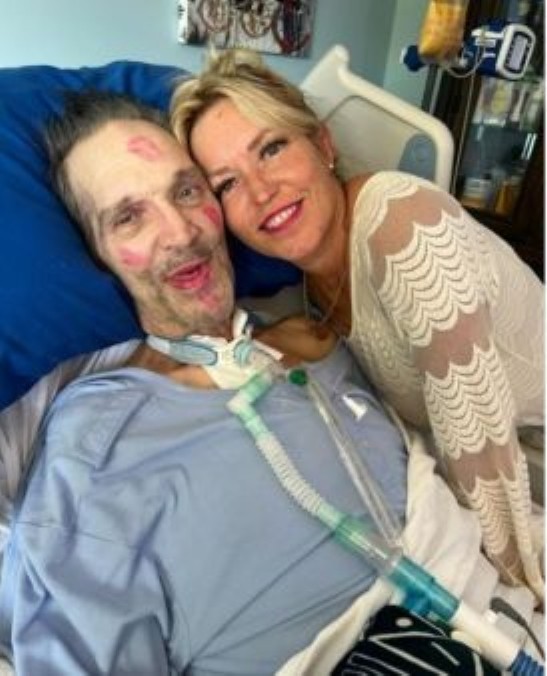
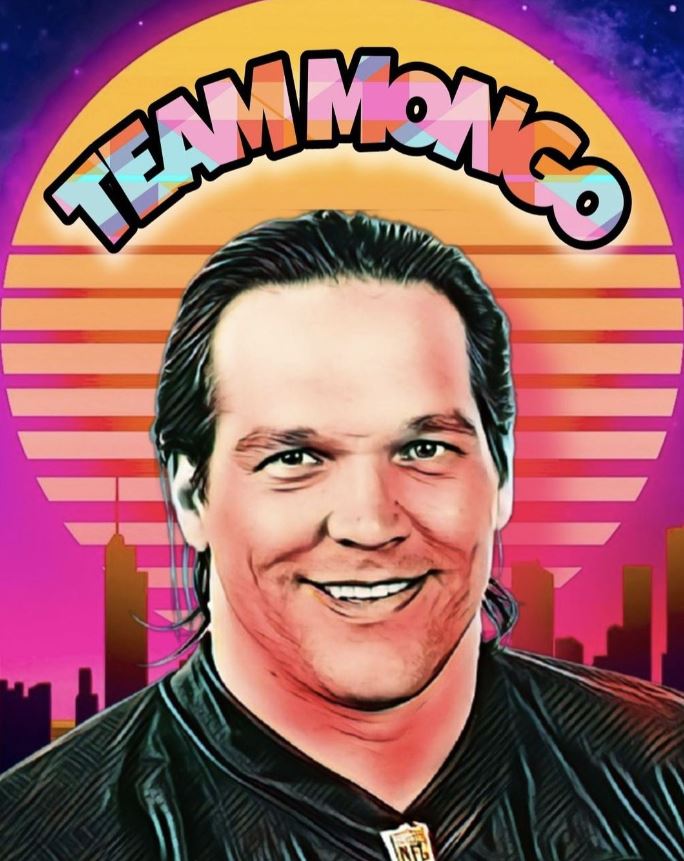
“I Learned From the Best”
Misty wanted me to explain that Steve had done big things in his life.
He’d accomplished extraordinary things in sports and entertainment.
But she was especially proud of how much he had done for other people.
In Misty’s words:
“My husband did great big things in his life. He achieved so much in the sports and media world, and he helped raise more money for charity than he ever did for himself in his not-so-normal life and careers.”
She told me Steve had inspired her.
Sometimes she was still afraid she wouldn’t be strong enough to take care of him—let alone help other people.
But she couldn’t remember seeing Steve afraid.
And that made her want to be better.
“I still have my husband, my daughter, my dog, and my crying room,” she told me.
“So I will never be too weary.”
She would ask for help.
She would keep searching for her inner strength.
She would not throw in the towel.
Misty understood that being strong and healthy was itself a privilege.
And she wanted to use that privilege for Steve.
For his fans.
For his legacy.
And eventually for other families affected by ALS.
“Don’t Go Into a Corner”
More than anything, Misty wanted people to know they weren’t alone.
“Don’t go into a corner to try and figure out how to fix things yourself,” she told me.
Because that corner can become a hole.
And once you’re in it emotionally, climbing back out can be terribly difficult.
Misty didn’t believe everything a caregiver needs could be found online.
You need people.
Real people.
Doctors.
Nurses.
Friends.
Family.
People who’ve already been through what you’re going through.
People who know things you don’t know yet.
People who can feed you.
Drive somebody somewhere.
Make a phone call.
Explain an insurance form.
Sit with your loved one.
Or simply tell you:
Go take your free day. I’ve got this.
Once Misty accepted help, she became more capable of helping herself.
Then she became capable of helping others.
“Helping others gives you strength,” she told me.
“And nothing gives you more courage than to see someone start to stand up when they’ve fallen themselves.”
That, Misty believed, was something Steve had been doing his entire life.
“You get back what you put out. Only more.”
Then she said:
“I learned from the best.”
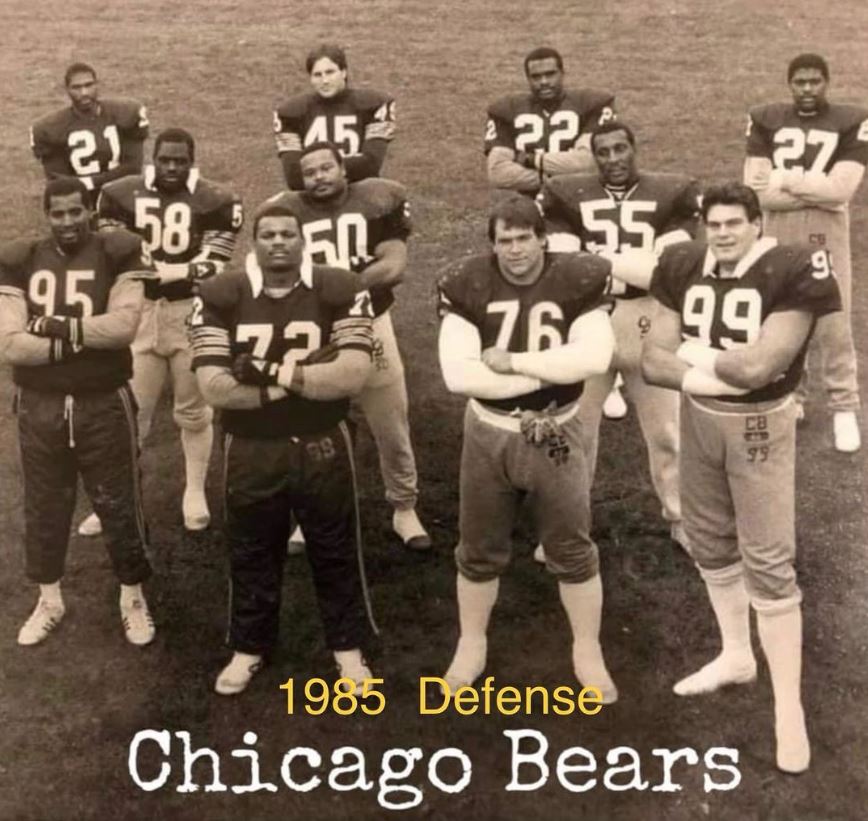
The People Who Showed Up
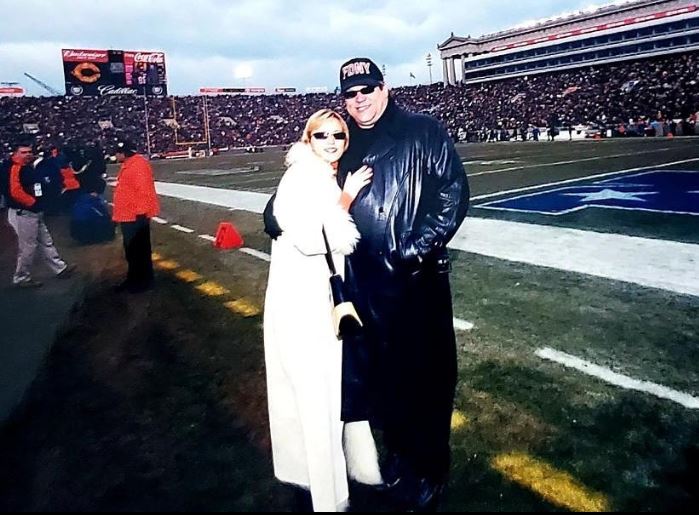
Misty wanted to thank the enormous circle of people who had shown up for Steve and for her.
Dan Hampton.
Gary Fencik.
Wanda and Jim Osborne.
Jim McMahon.
Keith Van Horne.
Richard Dent.
Tom Thayer.
Otis Wilson.
Tyrone Keys.
Kevin Butler.
Shaun Gayle, who flew in from Europe to support Misty at a fundraiser.
Dennis “Silky D” McKinnon.
Jay Hilgenberg.
Mike and Diana Ditka, who helped connect Misty with the Gridiron Greats Assistance Fund and other NFL families.
Jimbo Covert.
The people who helped retrofit the McMichaels’ home.
The nurses.
Doctors.
Friends.
Neighbors.
Fans.
Family.
The people who came with money.
The people who came with food.
And the people who simply came.
Because caregiving may look like one exhausted woman sitting beside one sick man’s bed.
But if that caregiver is fortunate, there is an entire community standing behind her.
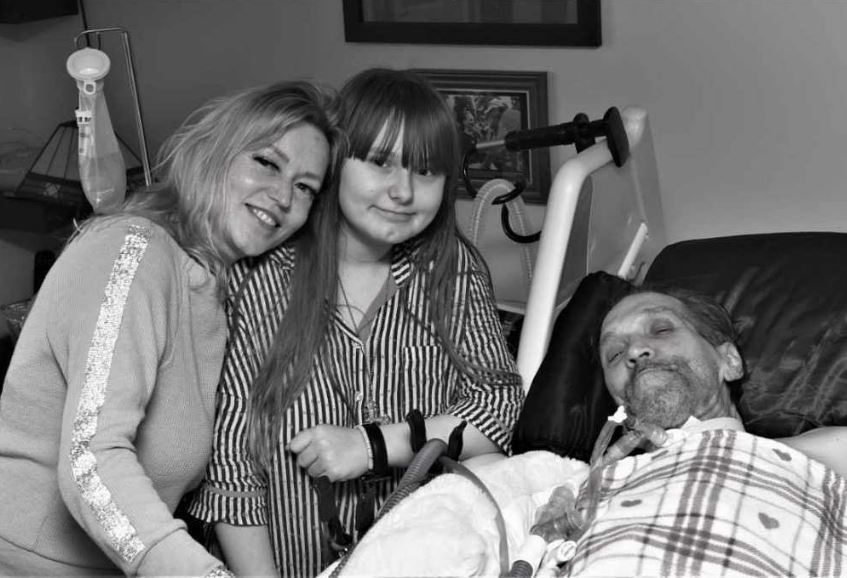
Misty’s Wish Came True
Remember Part 1?
That night at the Pearl Oyster Bar?
Misty sat alone with her lemon drop and wished for a good man.
She wanted a man she could love and adore.
A man who could take care of her.
And a man who would appreciate what she could do for him.
Then Steve McMichael walked through the door.
The wish came true.
Just not in the way Misty could possibly have imagined.
Steve took care of her.
And eventually…
Misty took care of Steve.
Wishes and prayers rarely arrive exactly as we envision them.
This one was bigger.
So much bigger.
Misty’s life wasn’t merely a dream anymore.
It had become a mission.
If You Know a Caregiver, Love Them Too
If you’ve read all four parts of this story, I hope you’ve felt some love for Steve.
And for Misty.
But I also hope you noticed something else.
When someone becomes terribly sick, our attention naturally goes toward that person.
How are they doing?
What did the doctor say?
Are they comfortable?
What do they need?
Those are important questions.
But there’s another question worth asking:
How is the person taking care of them?
Do they have food?
Have they slept?
When did they last leave the house?
Who is handling the bills?
Who is listening to them?
Do they have someone who can take over?
Do they have three angels?
Do they at least have a crying room?
If someone you know is caring for a parent, spouse, partner, child or friend…
Love the patient.
But please remember to love the caregiver too.
I didn’t completely understand that when I first wrote Misty’s story.
I do now.
And that’s one of the reasons her story belongs beside the one I will eventually tell in Saving the Father.
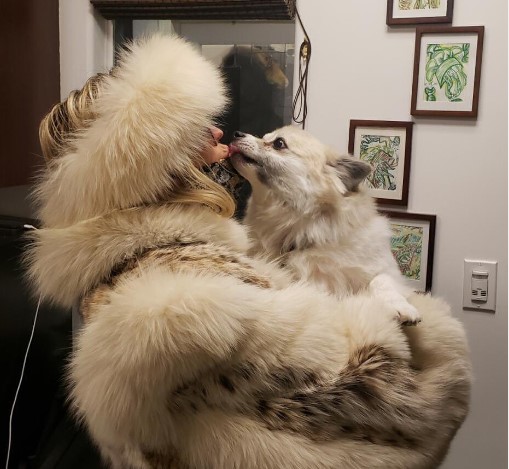

Epilogue: Steve “Mongo” McMichael
When I originally wrote this four-part story, Steve McMichael was still alive.
Much of what you’ve just read was written while Misty was still fighting to keep him comfortable, safe, loved—and here.
The story continued after I stopped writing it.
Steve McMichael had already lived several remarkable public lives.
He became best known as a defensive tackle for the Chicago Bears and was a member of the legendary team that won Super Bowl XX.
After football, Mongo entered another world entirely: professional wrestling.
He appeared with WWE and later became a familiar face in WCW, first as a commentator and then as a wrestler. He joined Ric Flair and the Four Horsemen and eventually won the WCW United States Heavyweight Championship.
Then came another honor.
In 2024, Steve McMichael was elected to the Pro Football Hall of Fame.
He was enshrined as a member of the Class of 2024.
Mongo made it to Canton.
And Misty was there beside him.
Steve McMichael died on April 23, 2025, after his long battle with ALS.
He was 67.
So now, reading these four stories again, one of Misty’s lines hits me differently:
“You can’t dream when you’re dead.”
Maybe.
But those of us still here can remember someone’s dreams.
We can tell their stories.
We can carry forward what they taught us.
And we can take care of the people who took care of them.
Misty McMichael – Heart of Gold
When I first started writing this series, I thought Misty should write an autobiography.
I still do.
There is so much about her life I couldn’t put into these four articles.
Her life before Steve.
Her life with Steve.
And now, her life after Steve.
Fantastical.
Shocking.
Funny.
Painful.
Inspirational.
She’s “just a wife.”
She’s also fierce.
Focused.
And she keeps company with angels.
She cusses a lot.
I still think she needs to learn how to meditate.
And properly use email and the computer.
Maybe she’ll find the time.
On one of her free days.
End of Part 4 of 4.
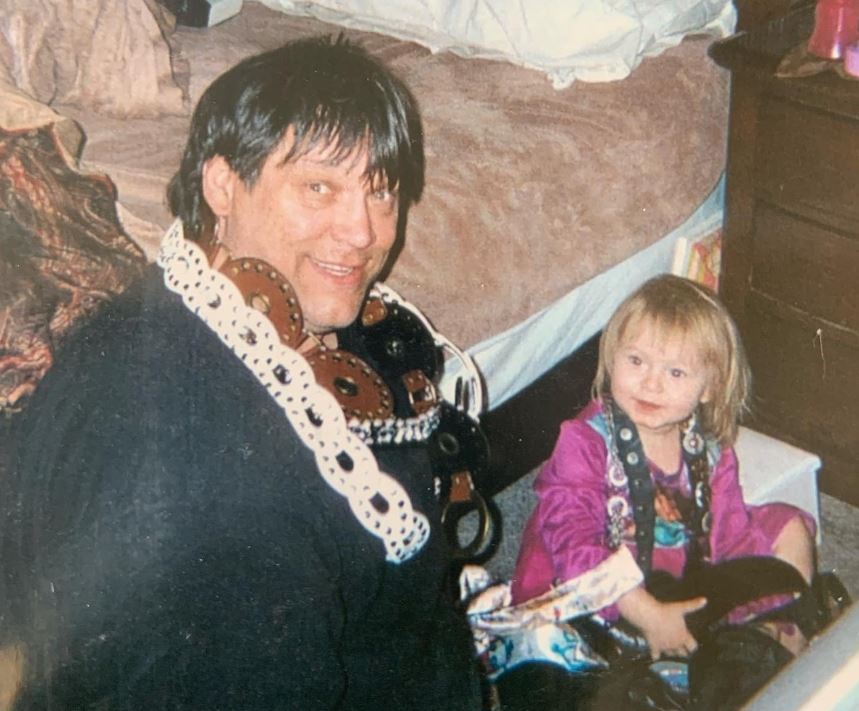
ALS Information and Help
ALS Foundation: The largest, national non-profit organization dedicated to ALS by providing assistance for people with ALS through a nationwide network of chapters, coordinating multidisciplinary care through certified clinical care centers. CLICK
Les Turner ALS Foundation: Provides comprehensive ALS care and support services in the Chicagoland area and at Northwestern Medicine. Information & answers in advanced vital care, research, and life-enhancing treatments. CLICK

The Mafia Hairdresser Chronicles: A Fusion of Fiction and Humor in an Original Serial Podcast
Immerse yourself in “The Mafia Hairdresser Chronicles,” a captivating fiction podcast that combines humor, drama, and a touch of the underworld. This top fiction podcast brings together two enthralling series: “Mafia Hairdresser” and “The Glow Stick Gods,” offering a total of 41 original fiction podcast episodes, plus bonus content, for a binge-worthy experience.

Special True Crime Podcast Episodes
The newly renovated The Boca Raton resort, spa & salon was newly purchased and renovated by The Northview Hotel Group. The author narrator was thrilled to be hired and work there until he retired from the salon industry. But the company lied, committed fraud and fraud inducement to the author and all the staff.
SEASON 3
5 Shocking Non-Fiction Episodes

How I Killed My Mother Podcast Episodes
Listen to every episode of How I Killed My Mother, the memoir podcast from Jon-David about mothers and sons, love and resentment, grief, forgiveness, and the strange road toward healing.
“A poignant exploration of familial relationships and the quest for personal identity.”

Jon-David & Goliath: Deceit, Trust & The Boca Raton
What happens when a dream job at a legendary luxury resort becomes a financial nightmare? Jon-David tells the story behind Jon-David & Goliath—and why standing up to Goliath wasn’t exactly new territory for him.
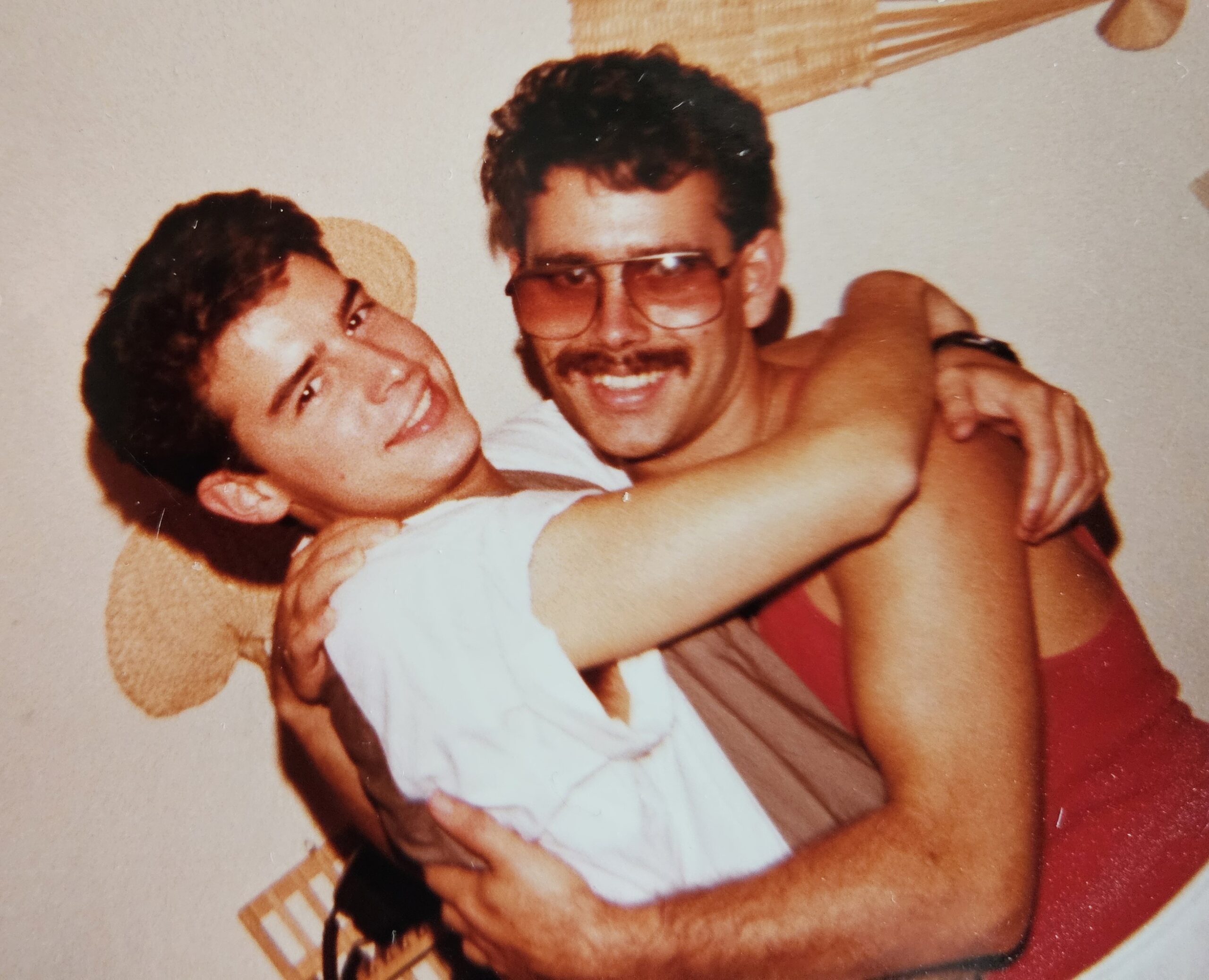
How I Killed My Mother: A Queer Family Story of Love & Growth
How I Killed My Mother started as a collection of queer family stories. Then caregiving, grief and writing the book forced Jon-David to look again at his mother—and himself.
My Relationship With My Mother Got Better After She Died
I thought death ended my complicated relationship with my mother. Instead, old loves returned, prayers seemed to be answered, and I began seeing both Mom—and myself—very differently.